
Portfolio
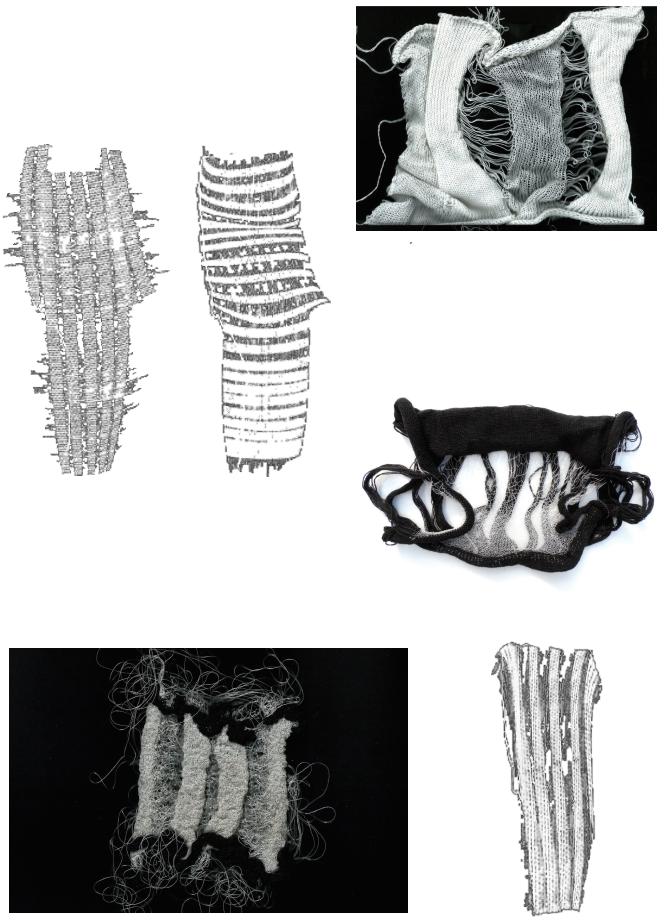
Researching Form in Knitwear
2017
Photos: Andero Kalju , Pawel Orynicz & myself
Materials: Wool & mixed
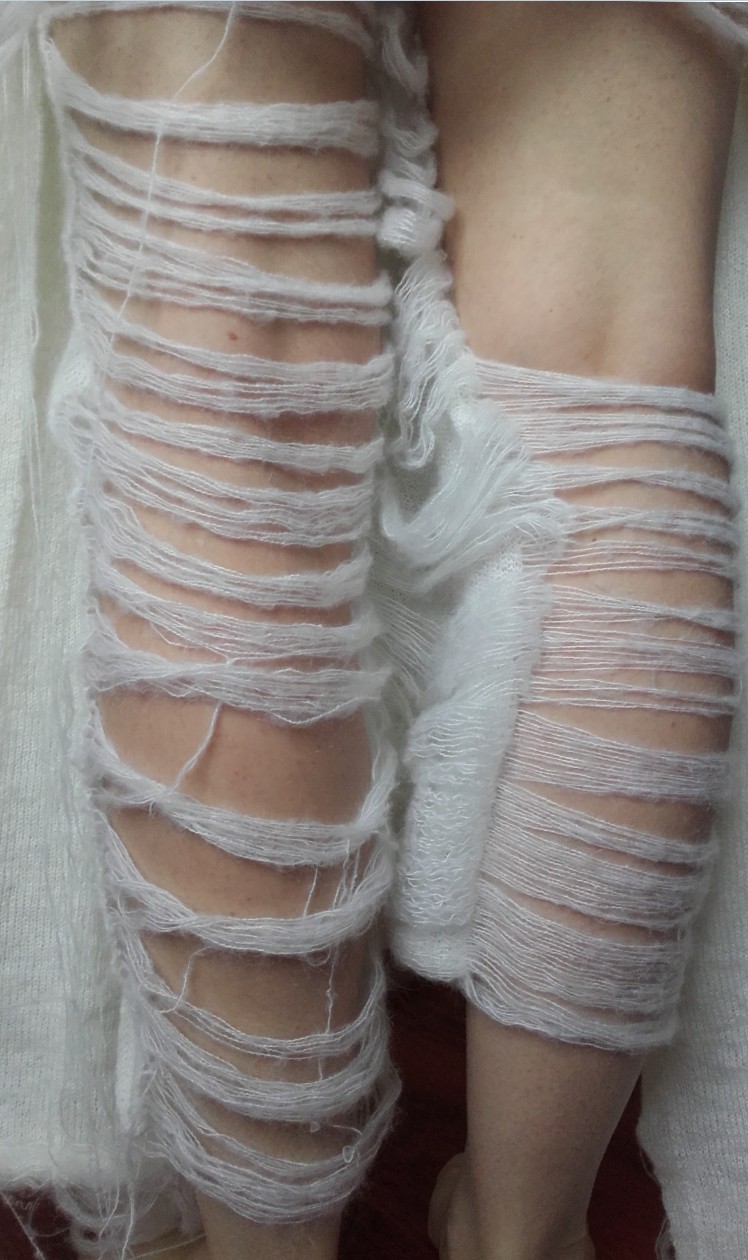
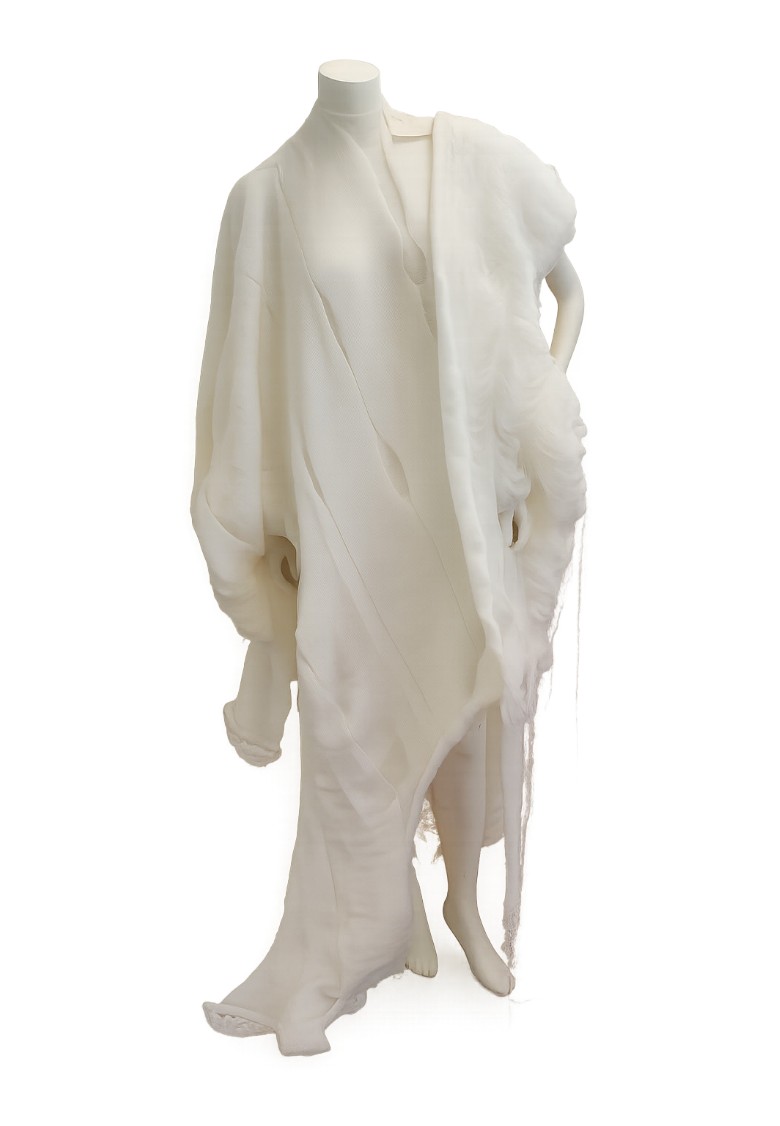
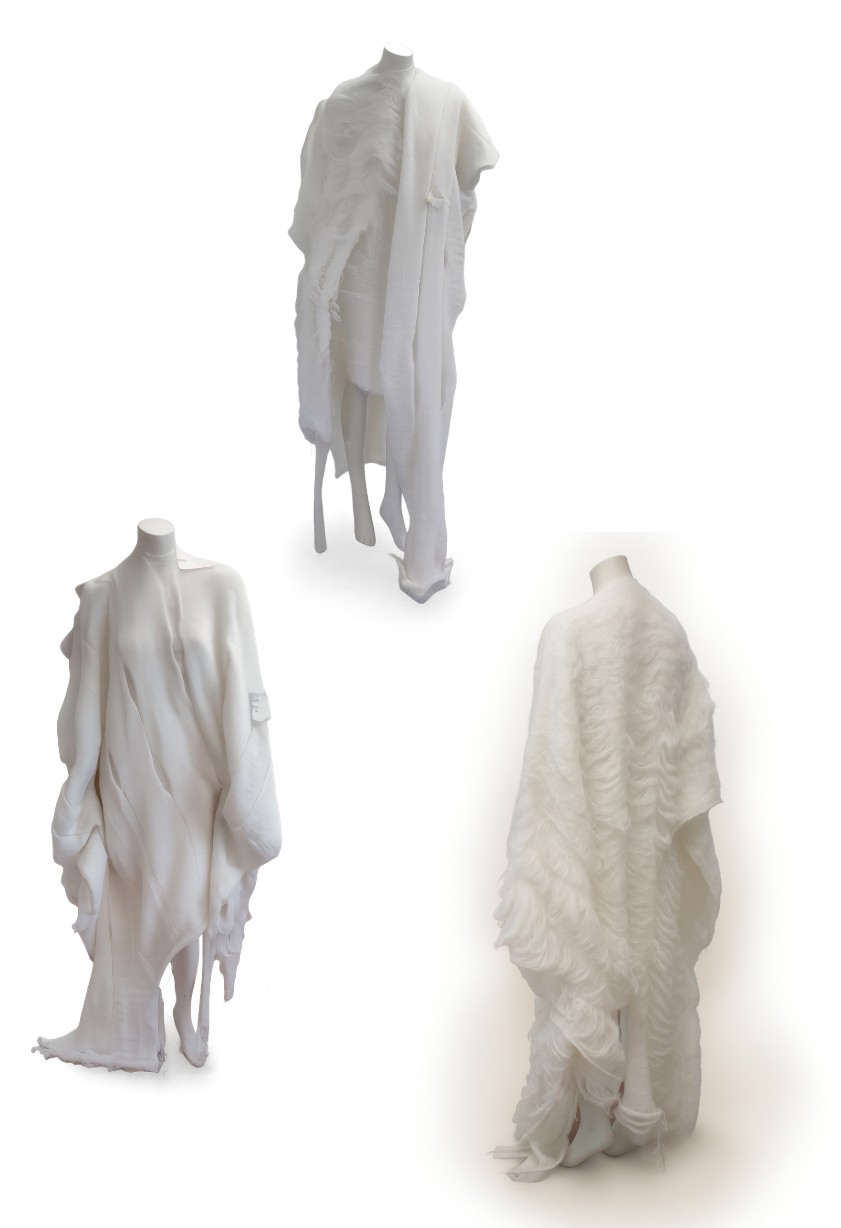
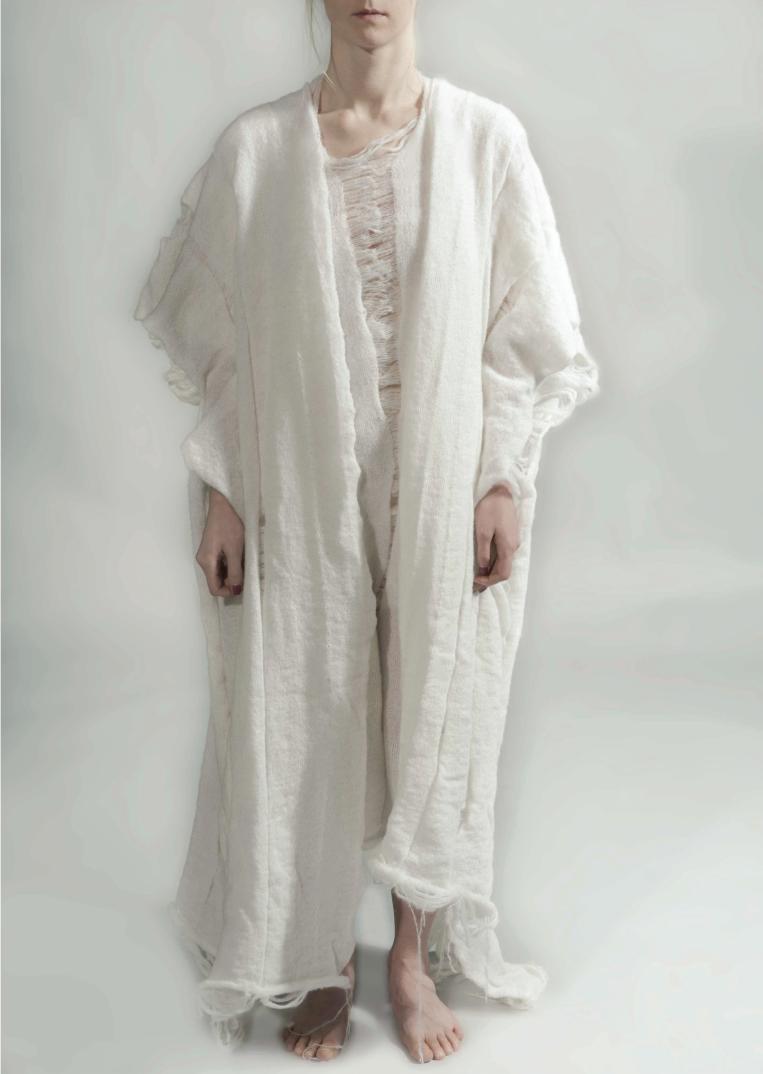
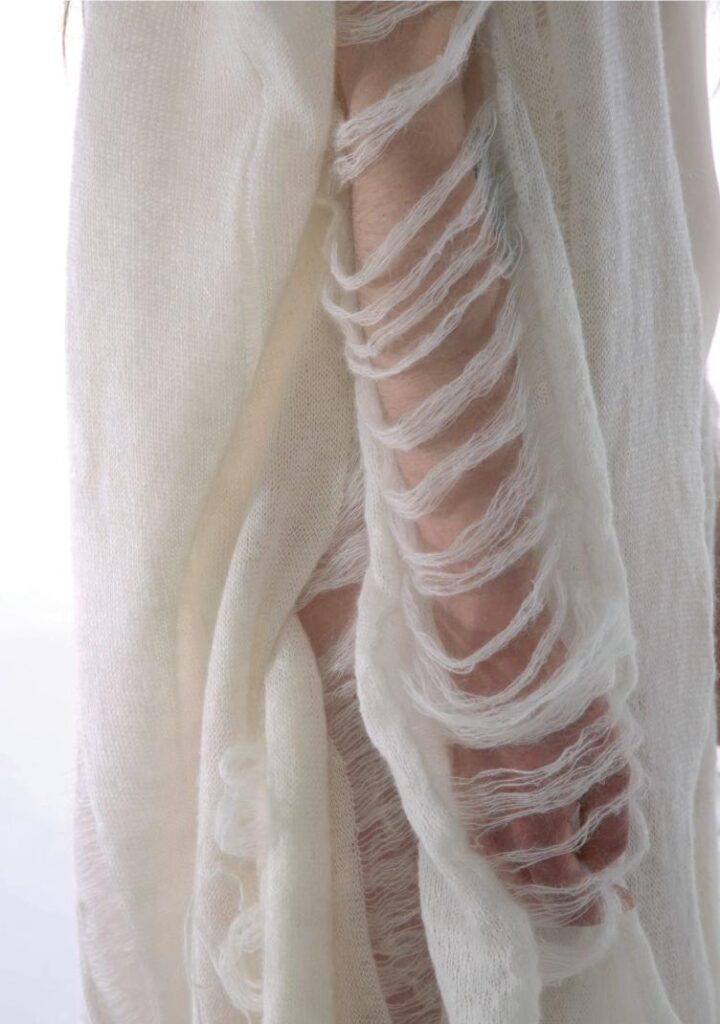
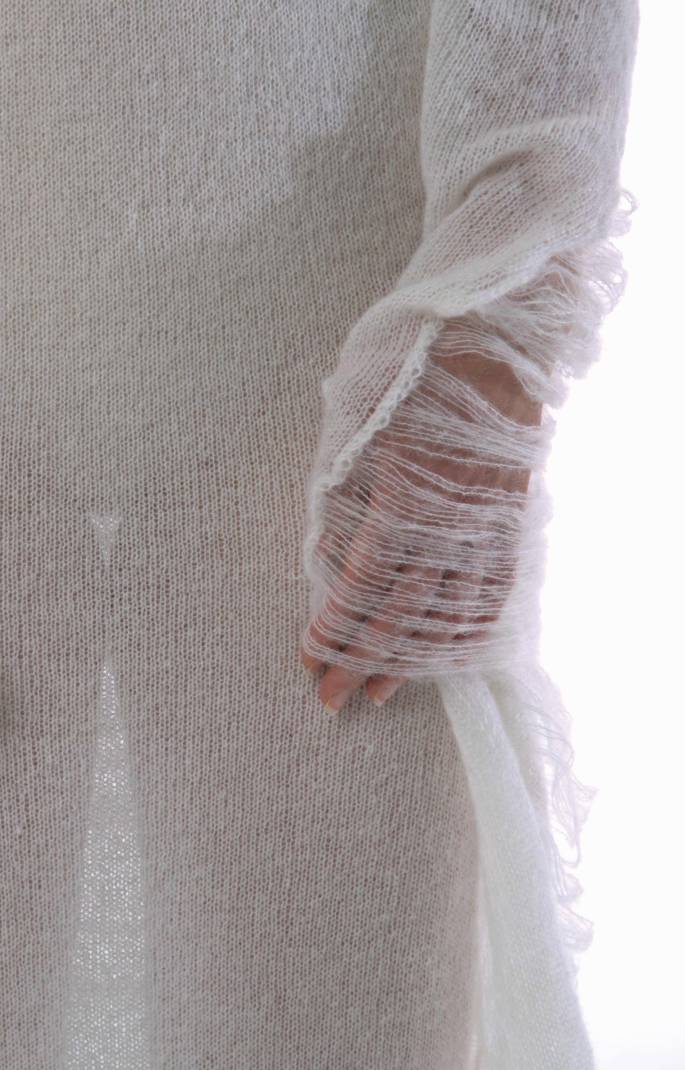
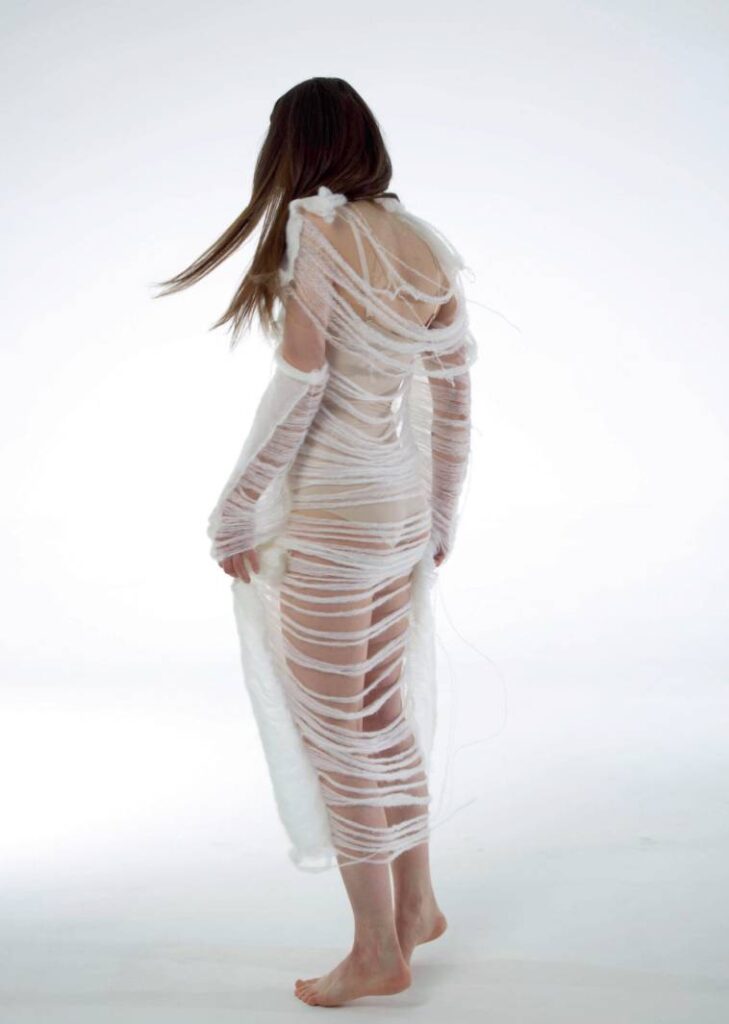
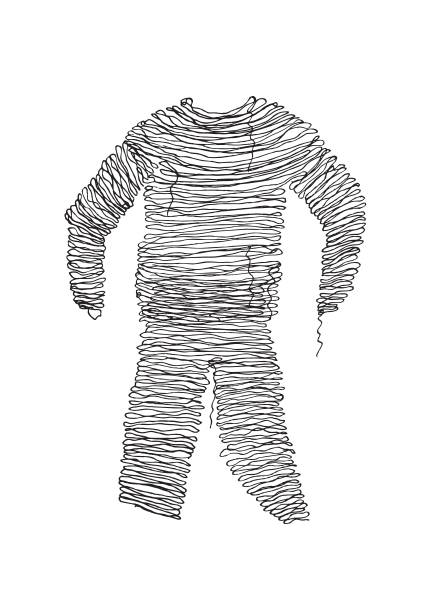
The study explores the rules and requirements for garments typical of the Western world in order to escape and oppose them. I define the form through yarn floats rather than abstract silhouettes or pattern cutting rules by knitting the form and material in a single process. Form is an emergent rather than imposed
Gnidry
2020 – ongoing
Photos: Marin Sild, Sigrid Osa, Pawel Orynicz,
Illustrations: Myself
Materials: Mixed
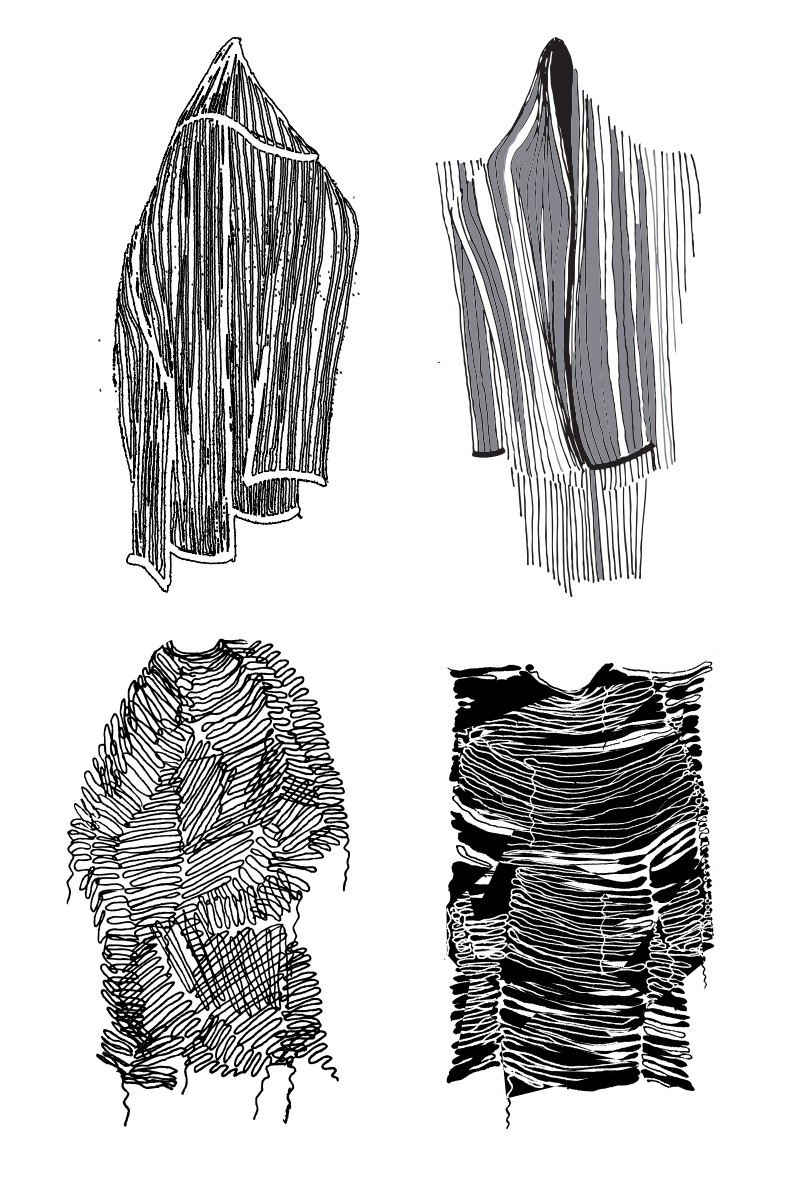
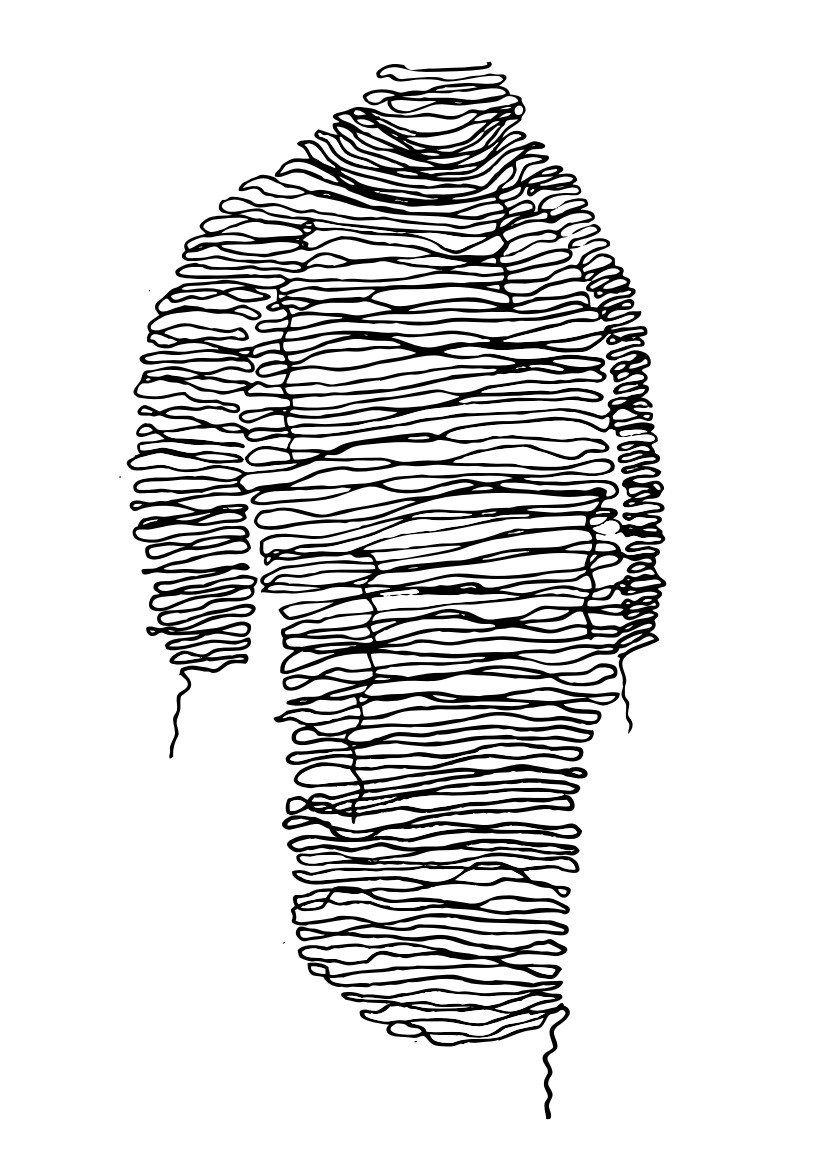
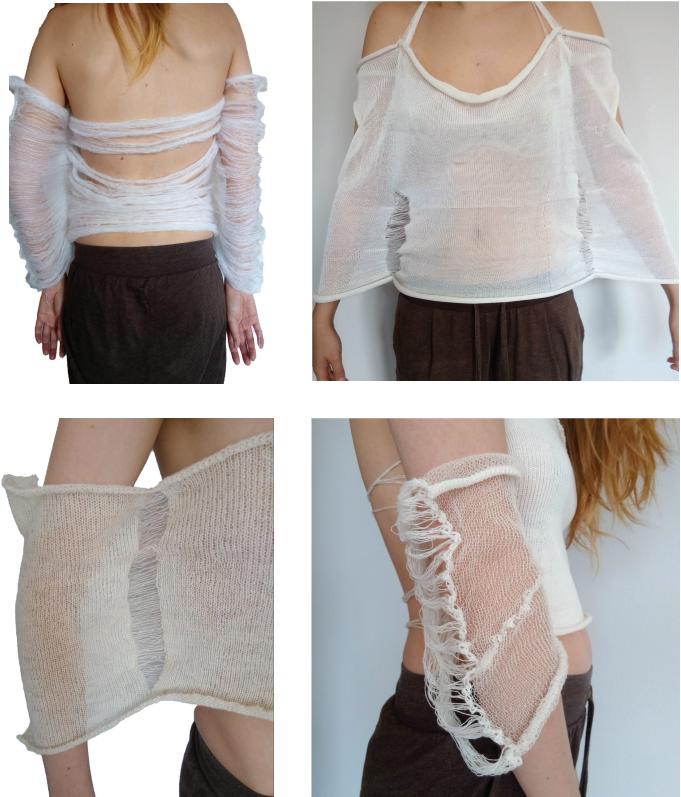
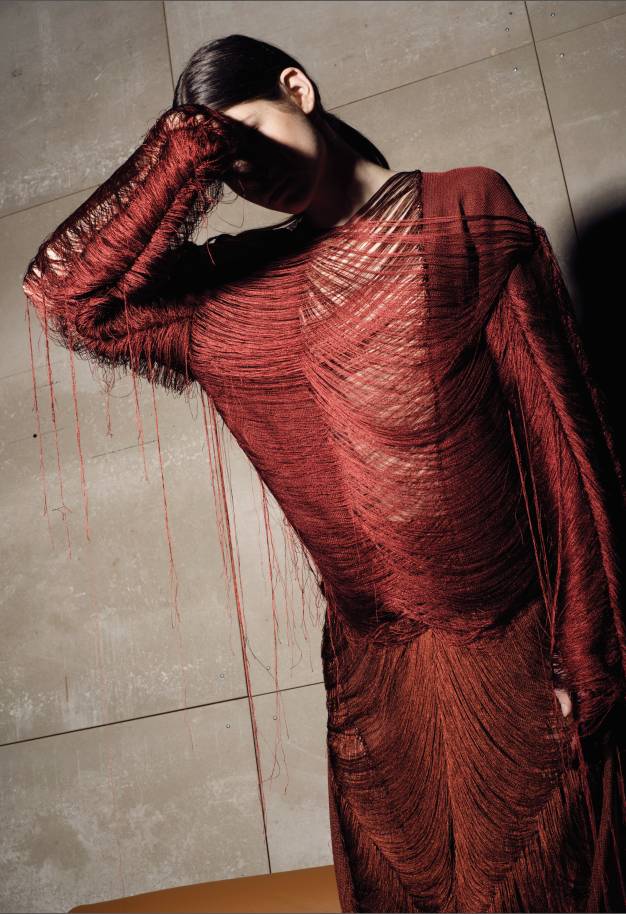
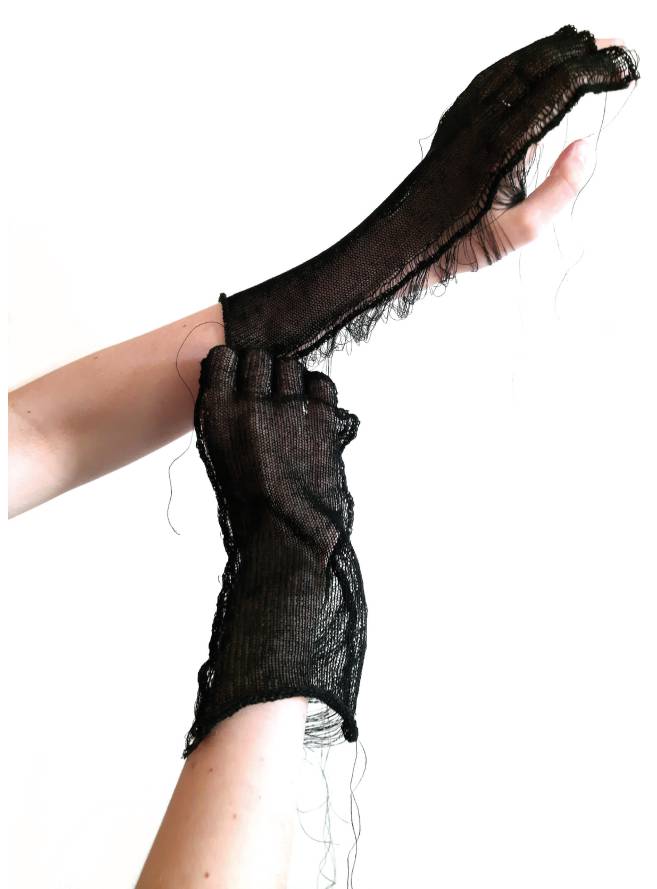
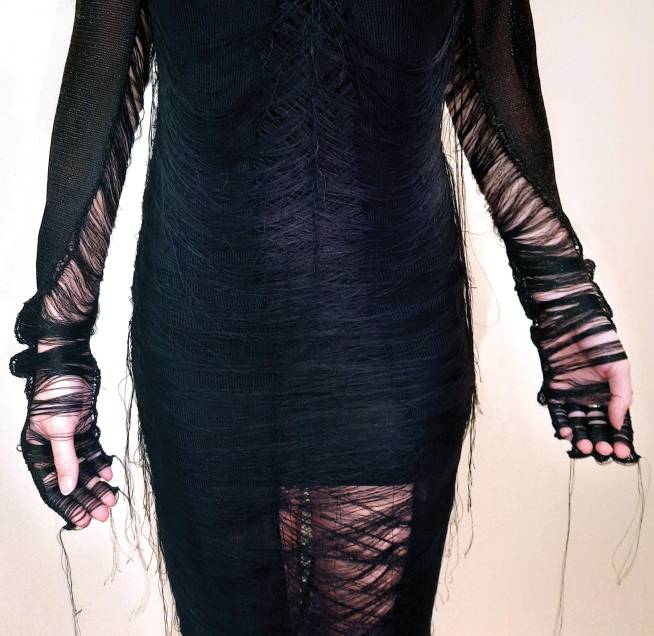
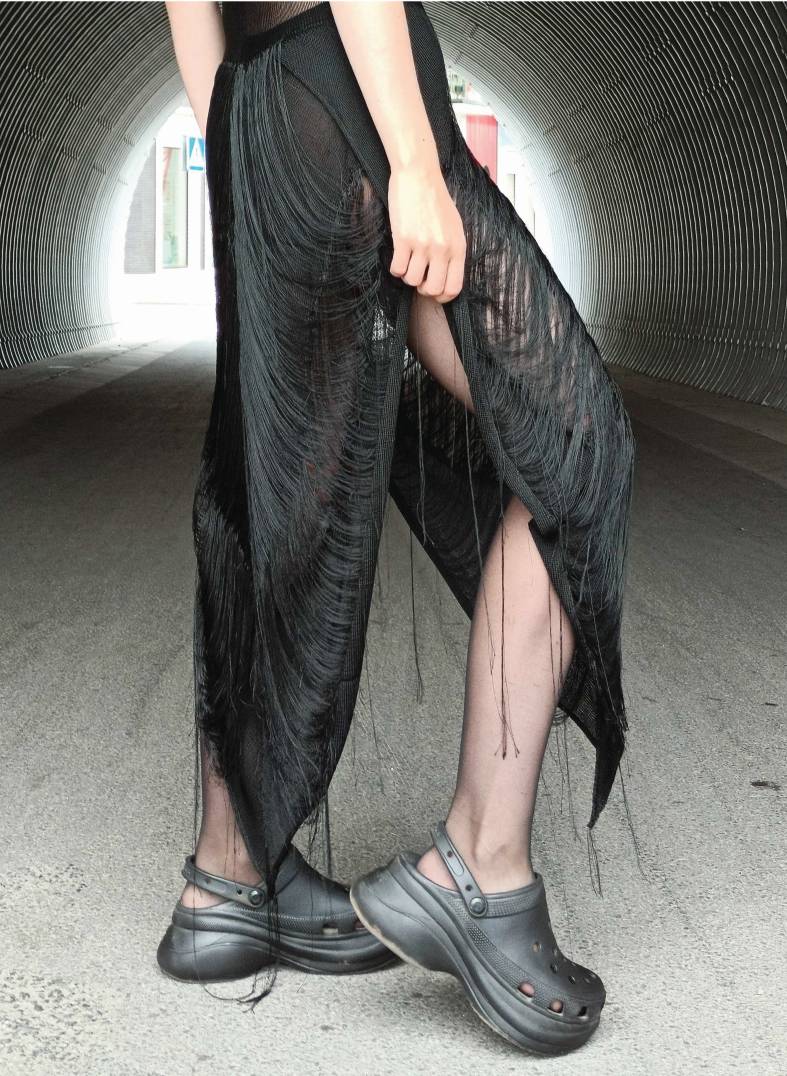
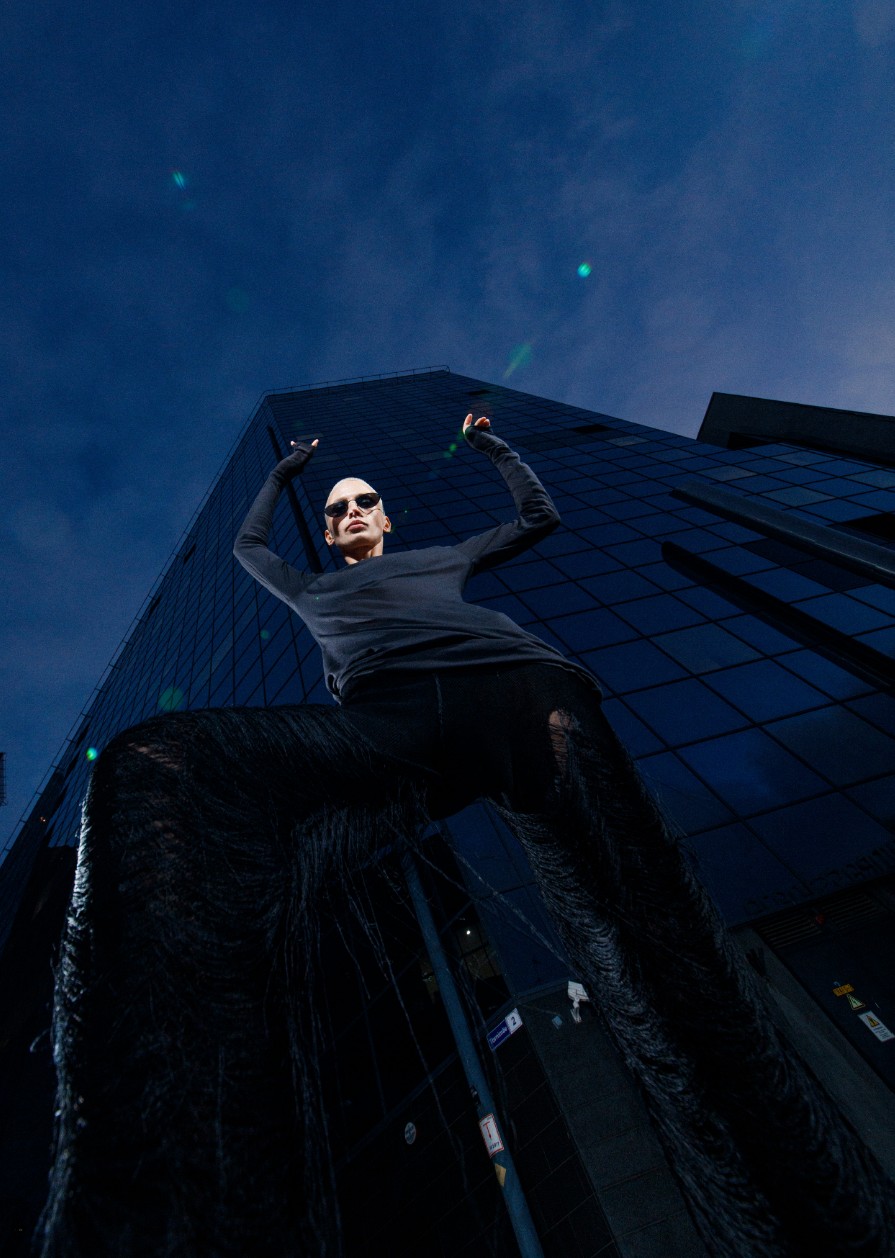
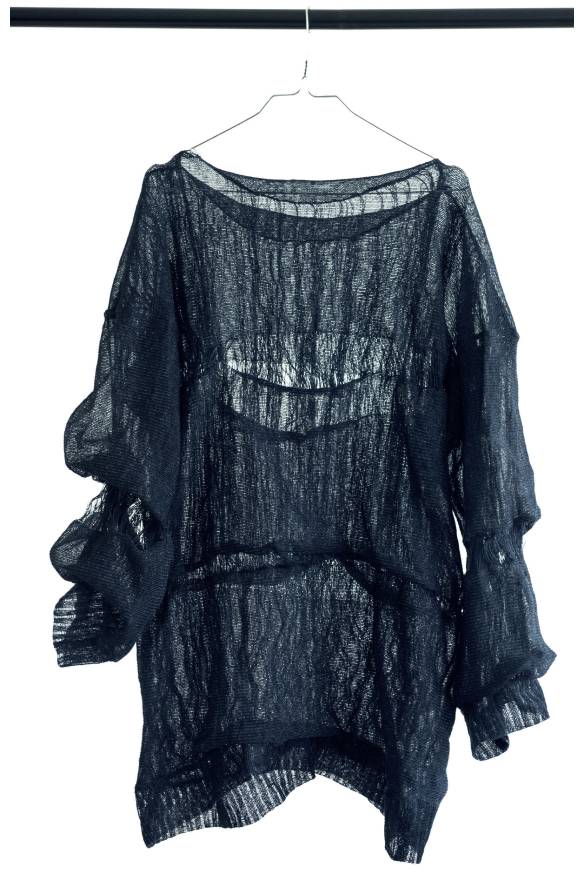
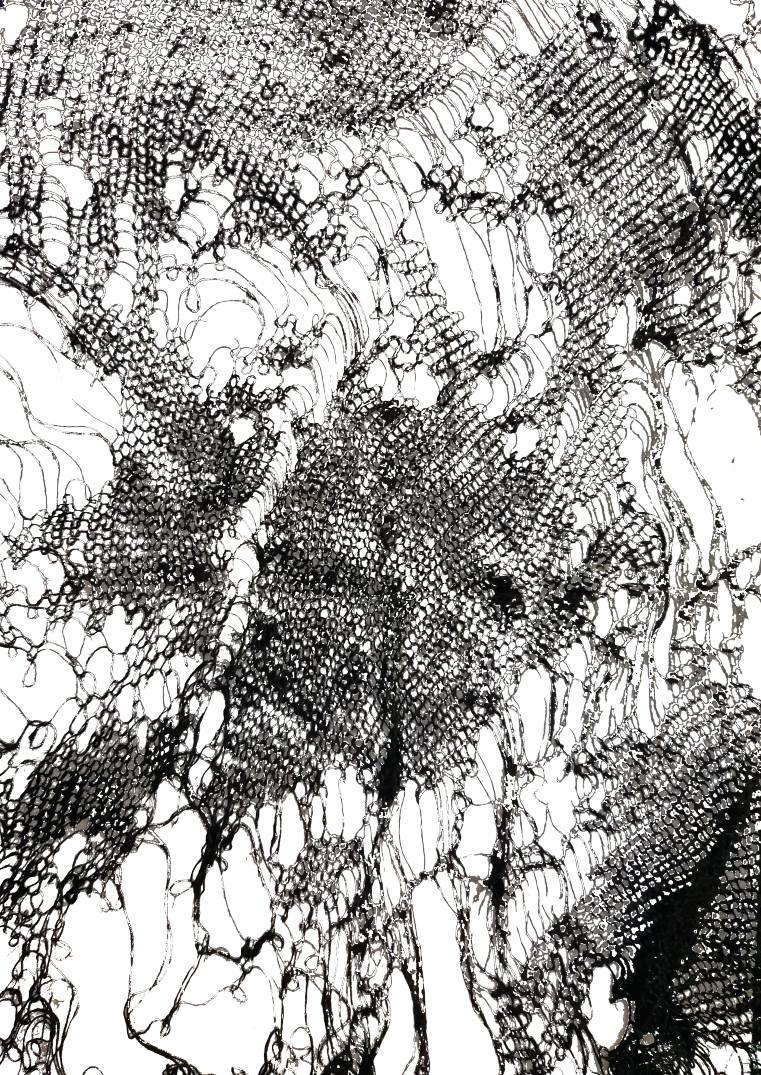
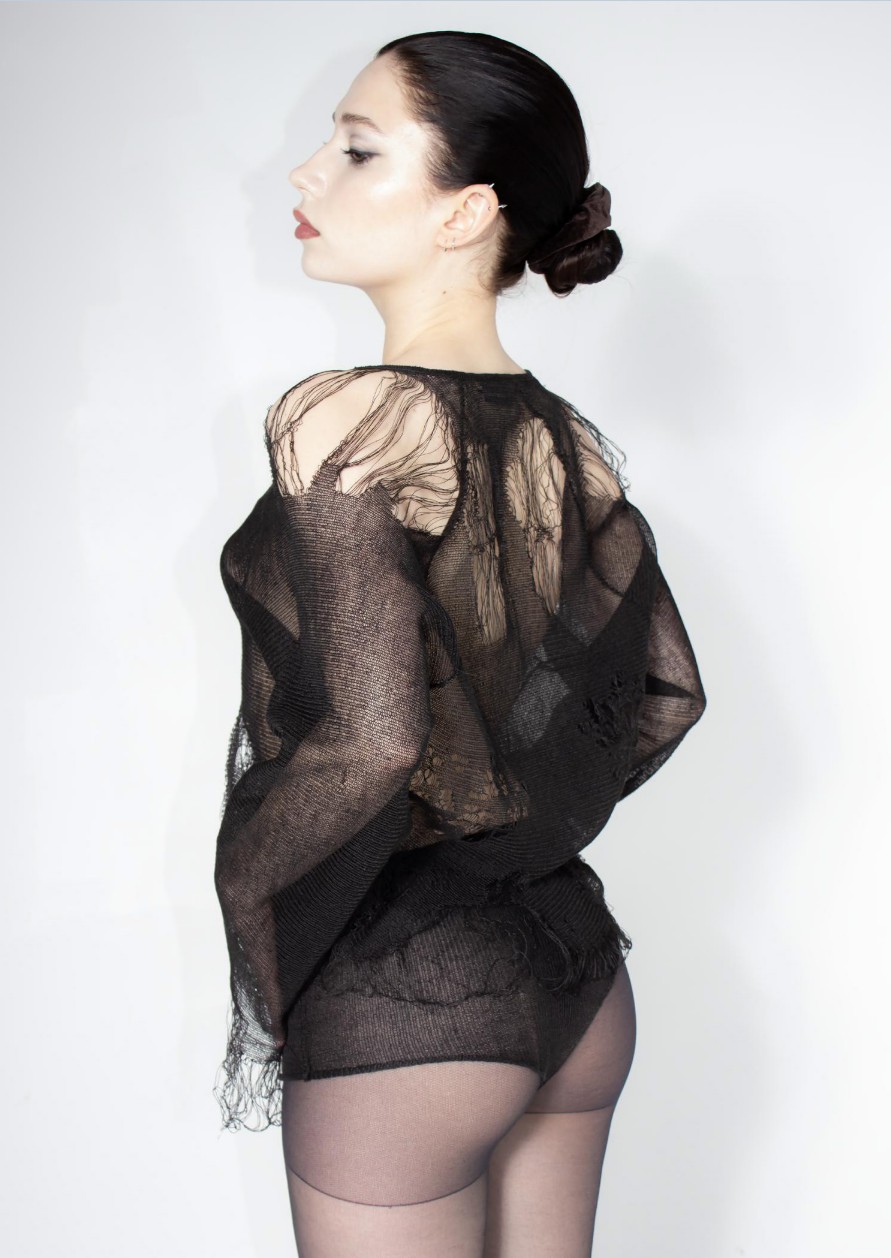
Gnidry turns the yarn floats in knitting from something impractical to something exciting. By shifting the yarn floats, the shape of the garment changes. They can make a two dimensional piece three dimensional. Where they form, an opening is created in the fabric. Pattern cutting turns into a whole new game.
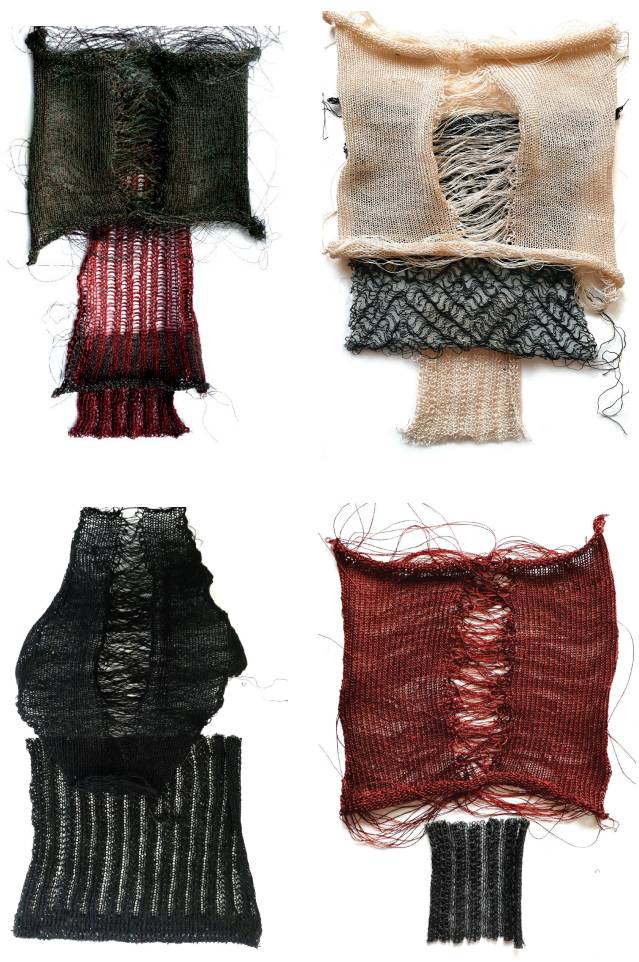
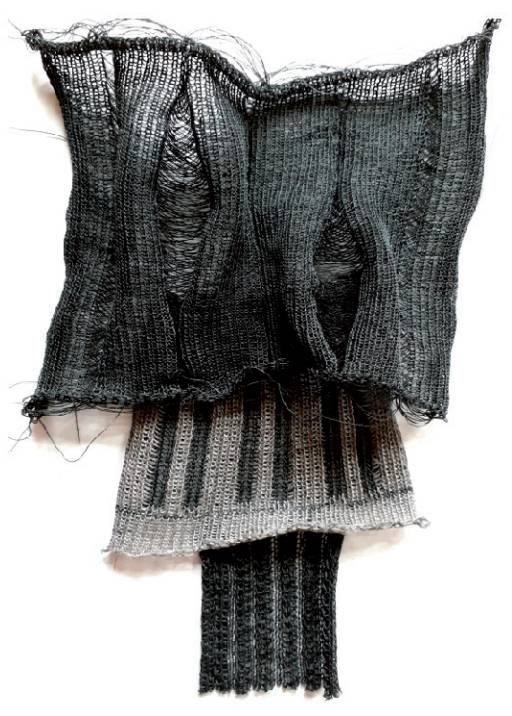
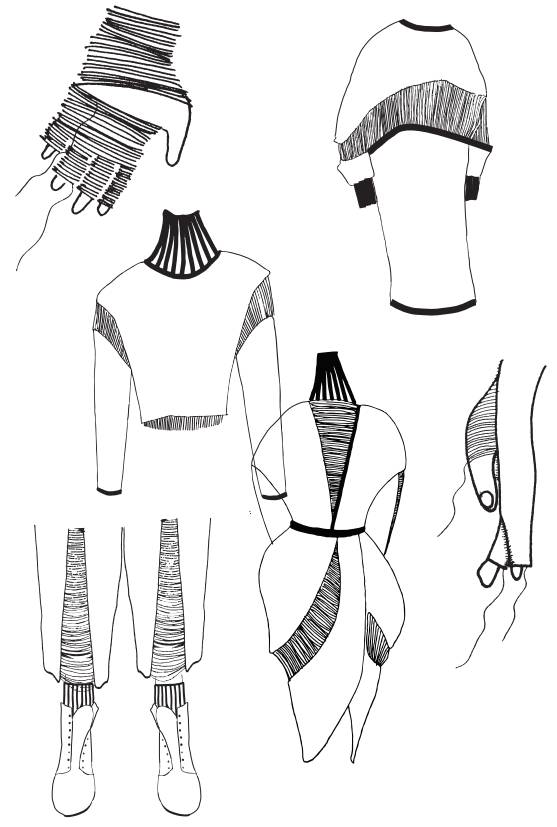
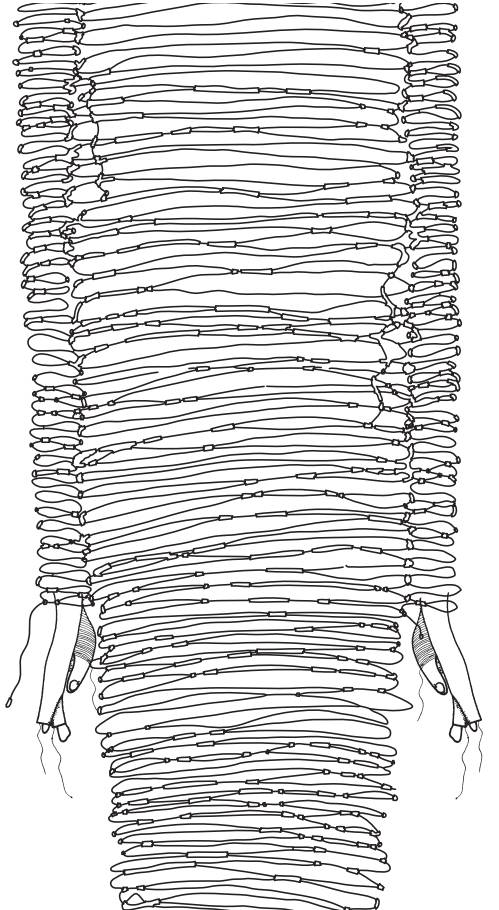
Broken/whole
Finished/
unfinished?
2020 – ongoing
Photos: Kirke Talu and myself
Materials: mixed
Photos: Marin Sild, Kirke Talu, myself
Materials: Mixed
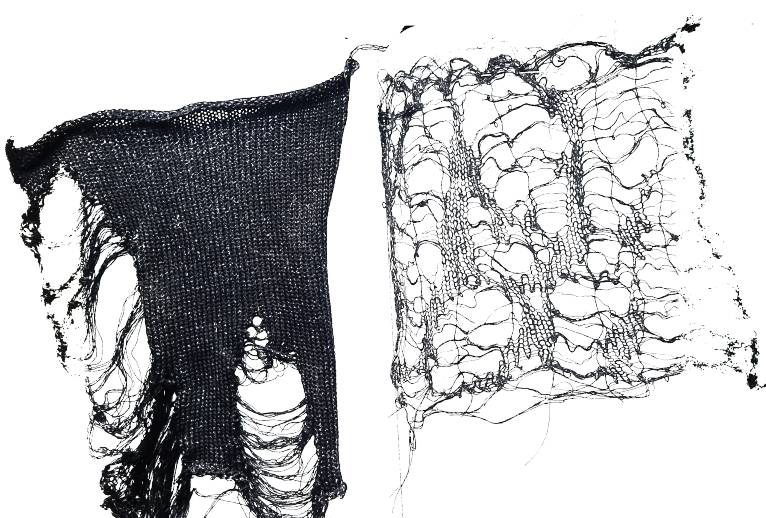
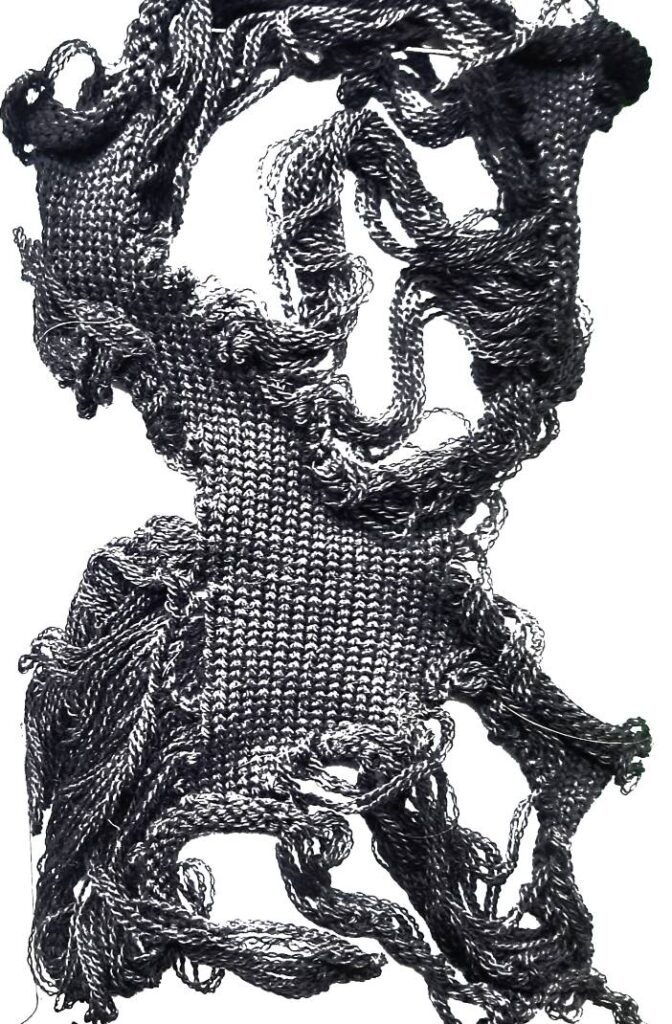
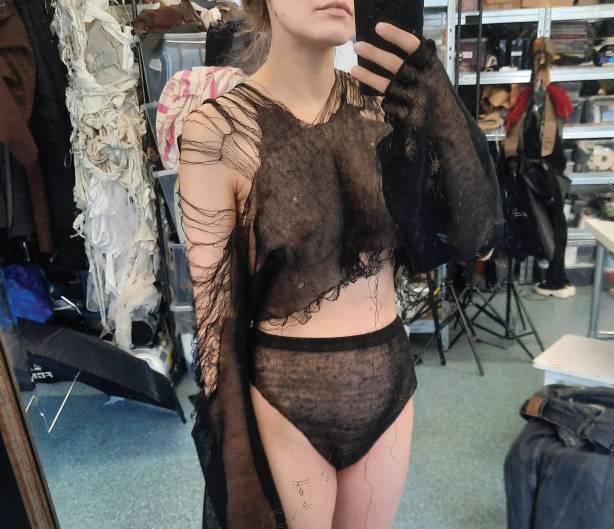
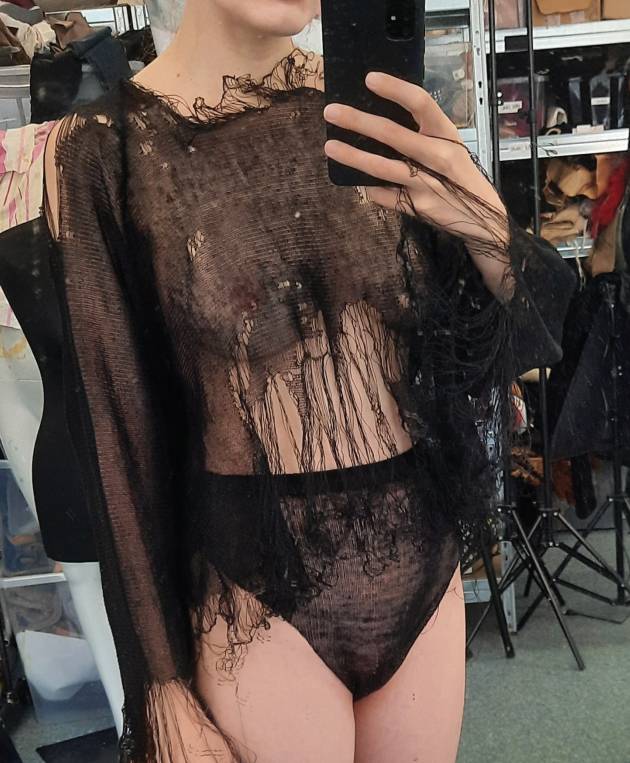
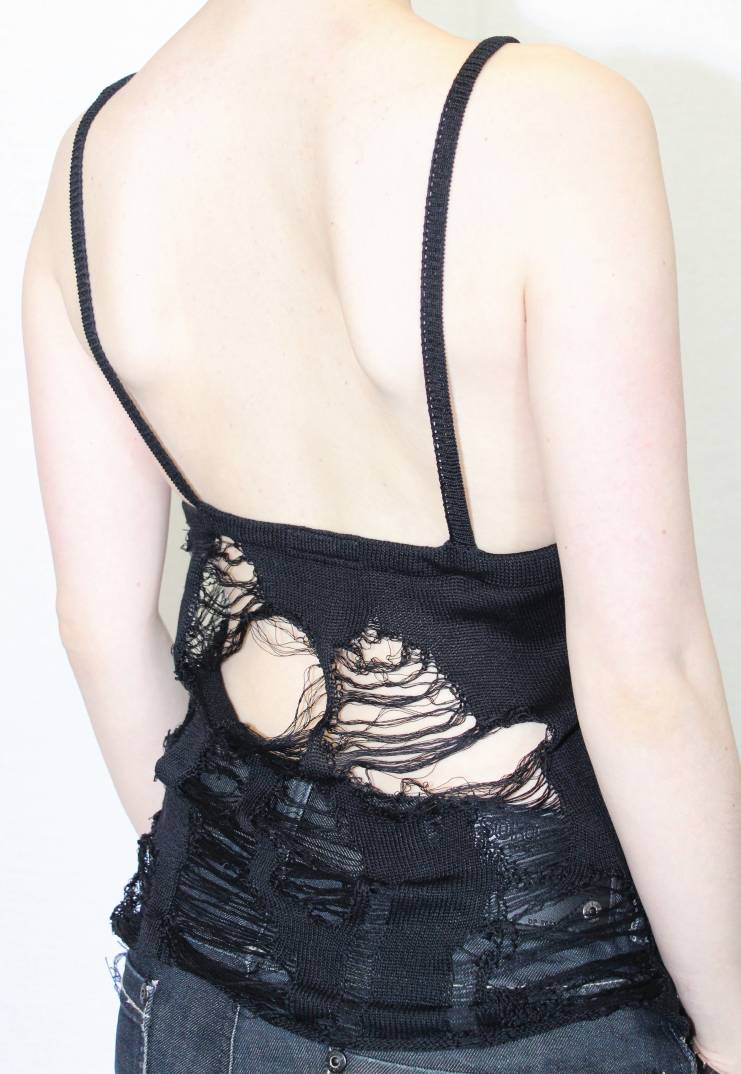
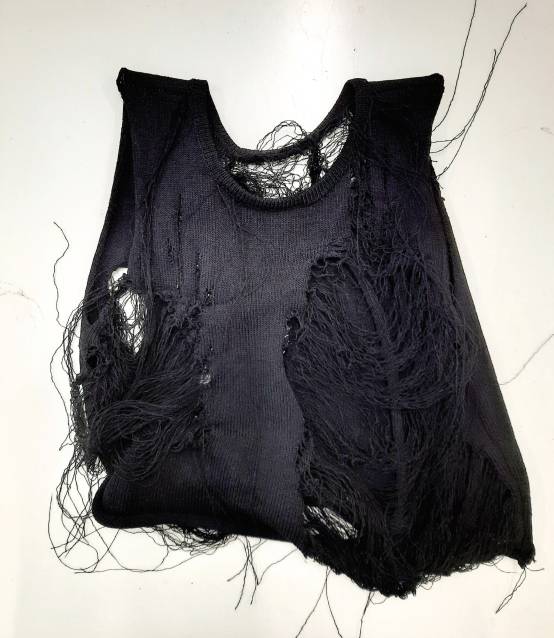
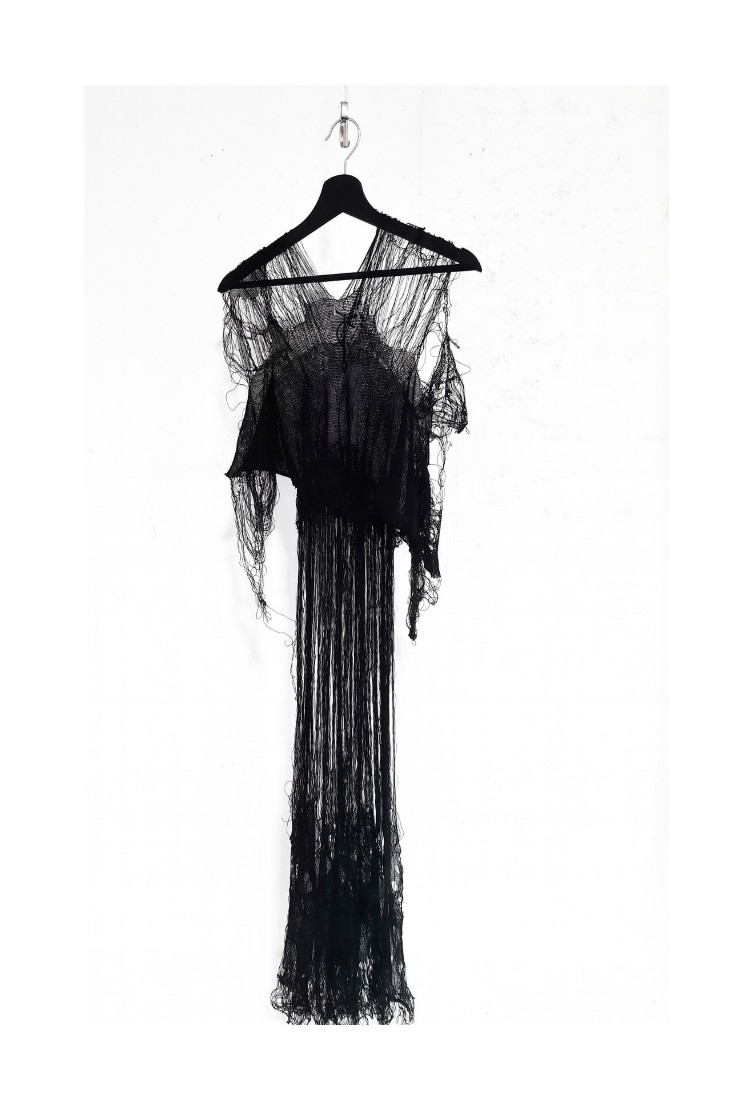
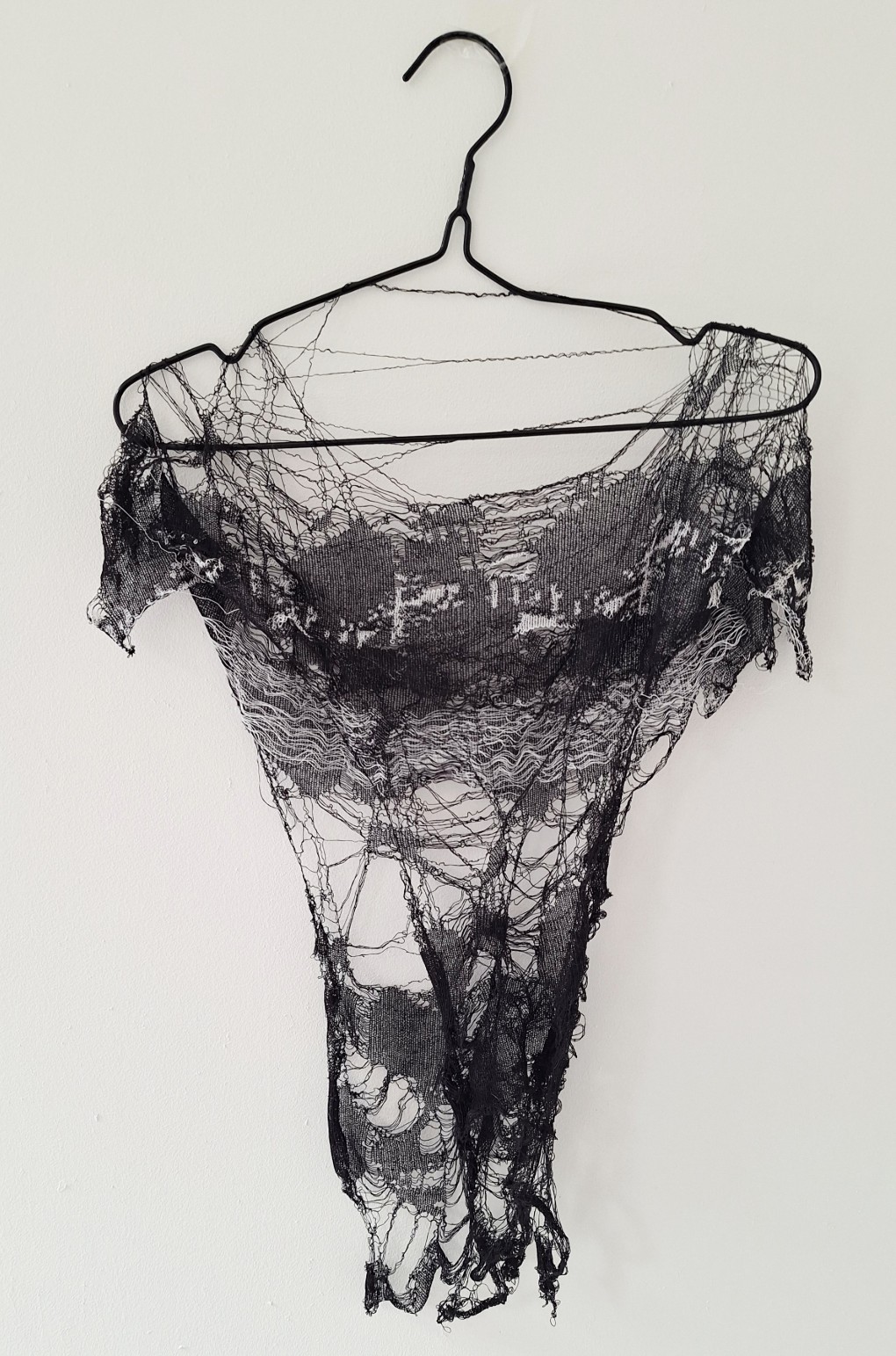
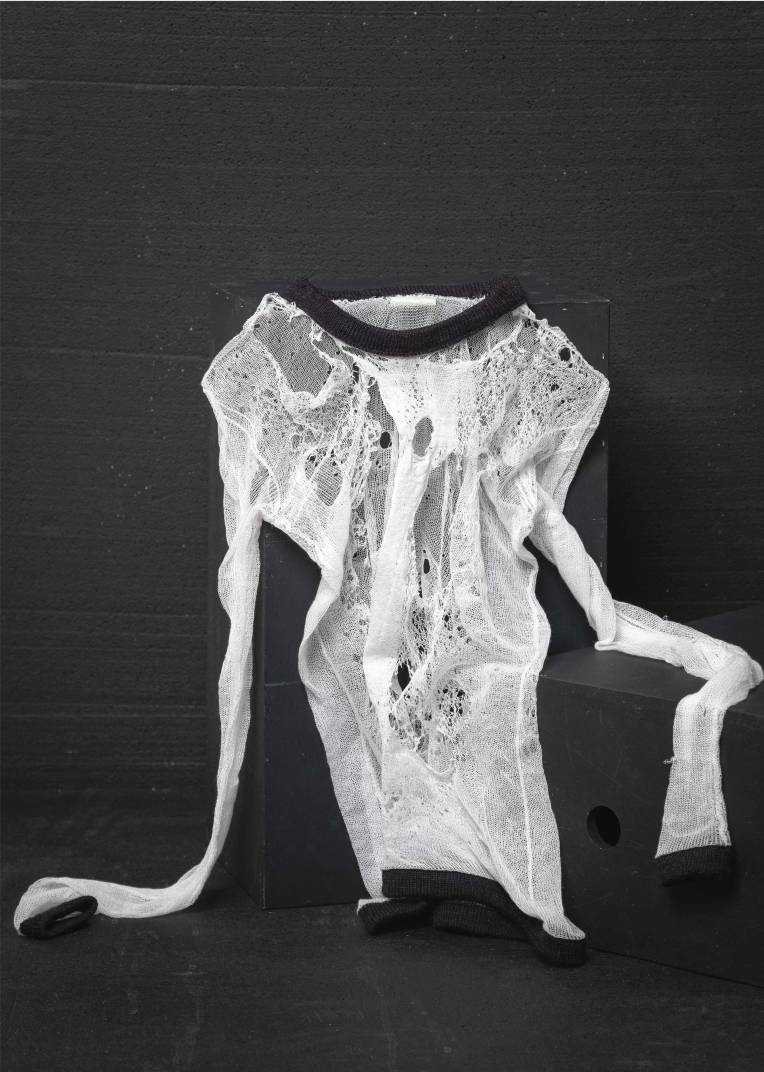
Materials are always in motion – longing to run amok. With the help of the water soluble PVA thread, knitted loops get loose in contact with water, leaving behind a world of structure that is both regulated and random. Opening up a garment to unravelling removes the focus
from the ideal state and “finished” or “broken” loses its significance. Sweater obtains a state of becoming instead. The piece can continue to live on its own, gradually reverting to yarn.
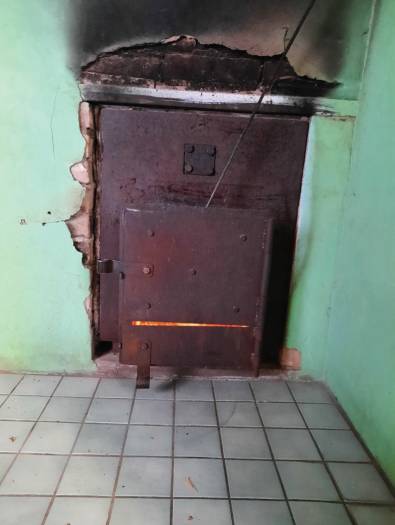
Sweaty
Sweaters
2021 – ongoing
Photos: Albert Kerstna, Pawel Orynicz and myself
Materials: PVA, wool, hemp
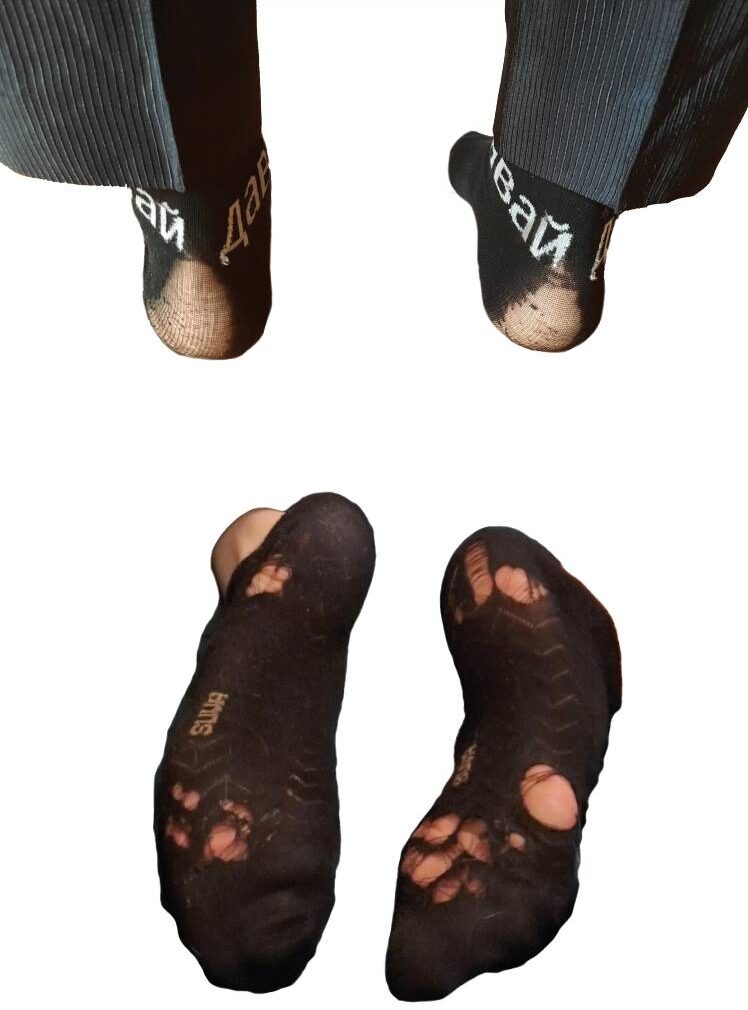
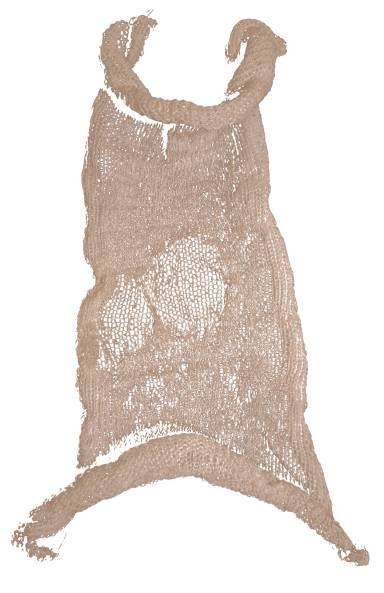
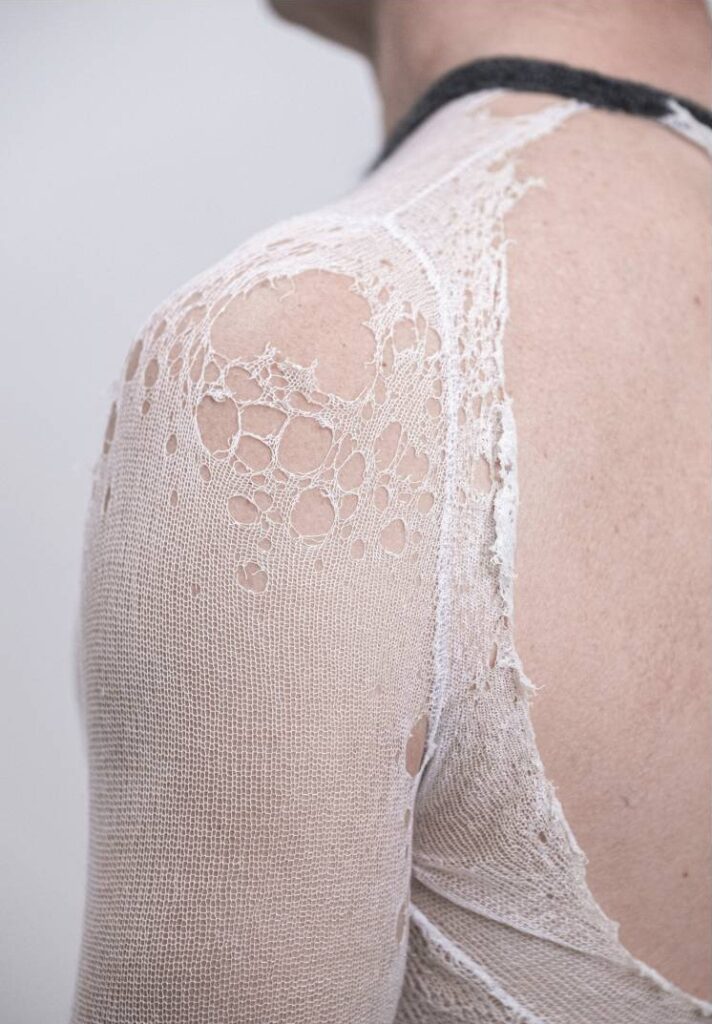
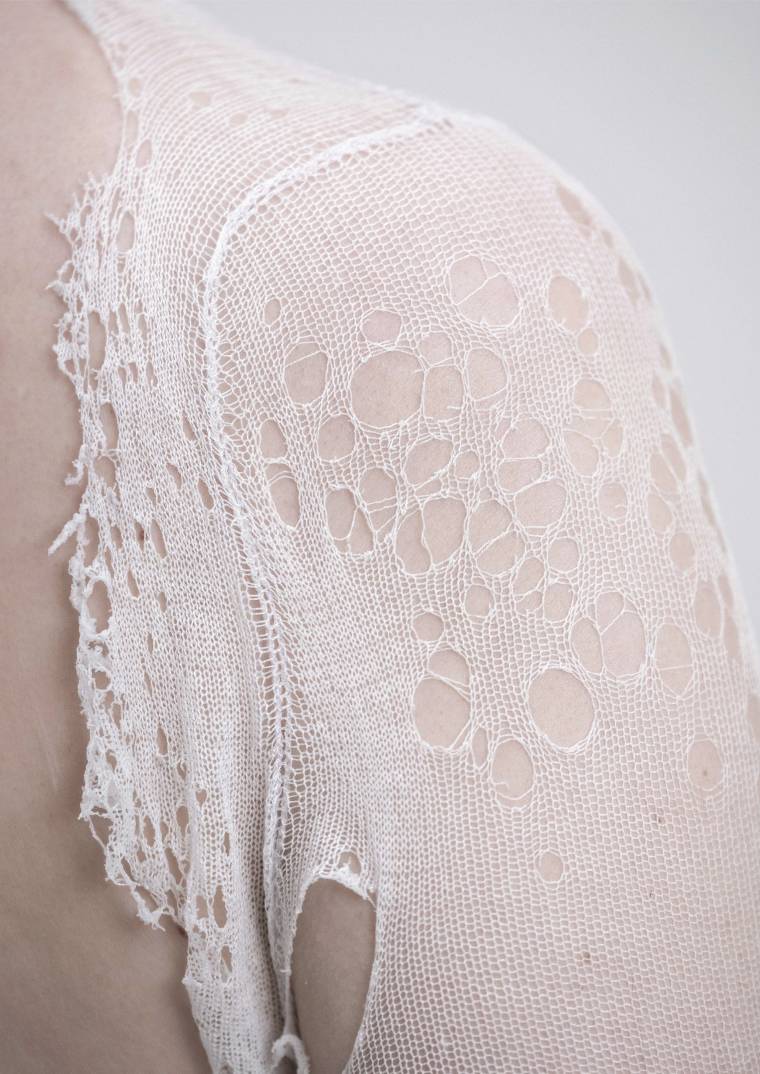
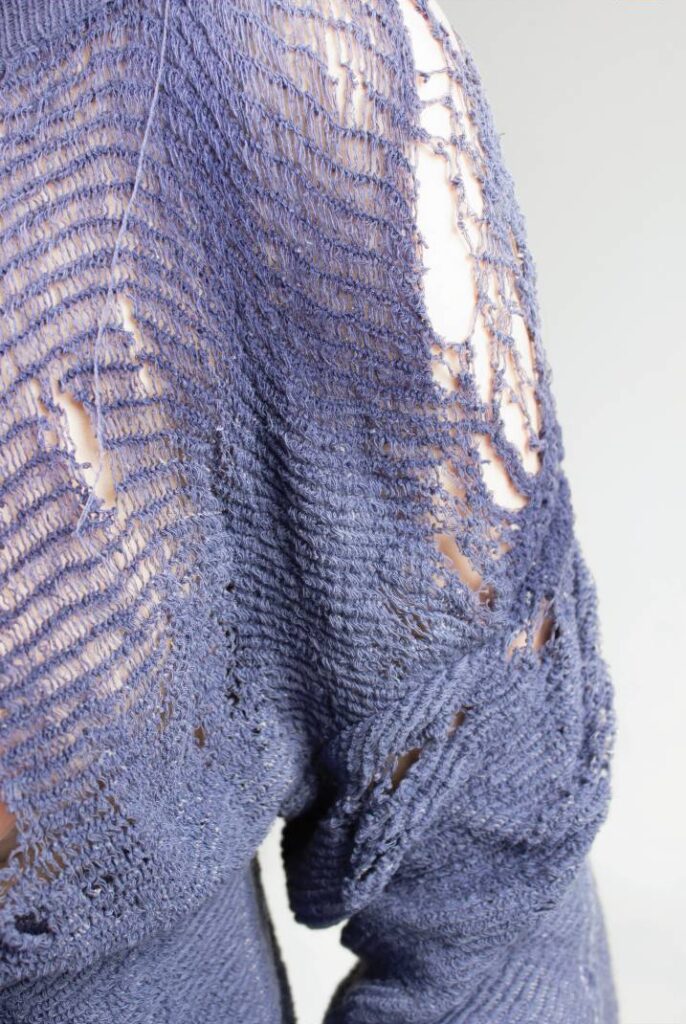
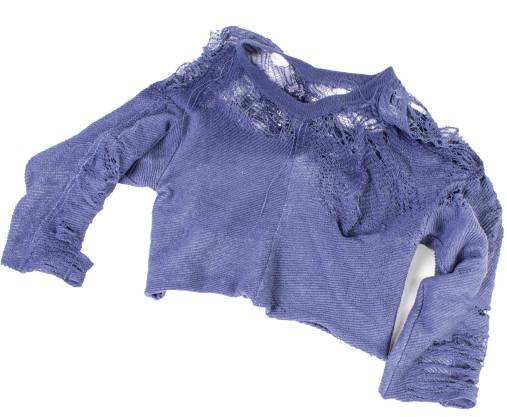
Dirty and broken items have a lot in common. Both represent deviations from their ideal state. Dirty things need to be cleaned, and broken things need to be repaired. Garments that cast doubt on these two concepts seek to de-emphasize their obviousness – to rethink them.
Plain sweaters represent a rather anonymous wardrobe basic, something we all have in our closets. What if I can use the sweaters to create a physical “sweat diary” of a 21st-century city dweller, prompting the body-mind to continue making the sweaters, thereby transforming them from anonymous to personal?
The wearing process becomes a study in which emotion, action, time, environment, and body – in addition to the material and technique – are all intervening. Intuitive design is being taken to a new level when dynamism of living is in charge.
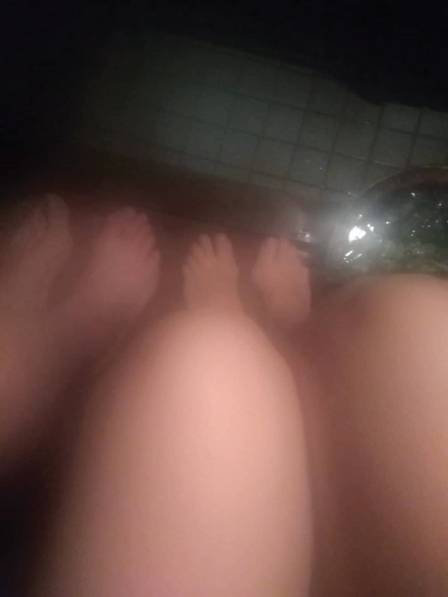
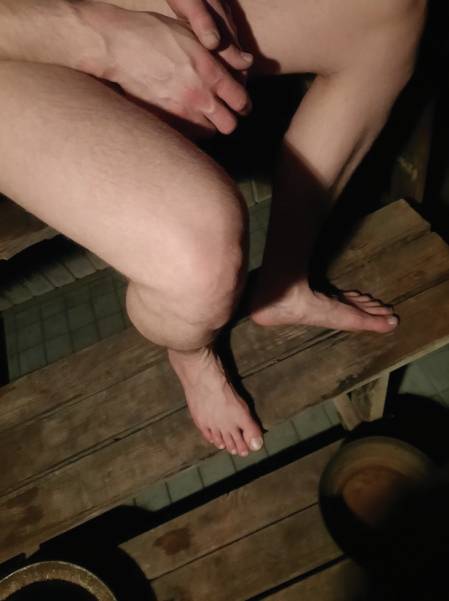
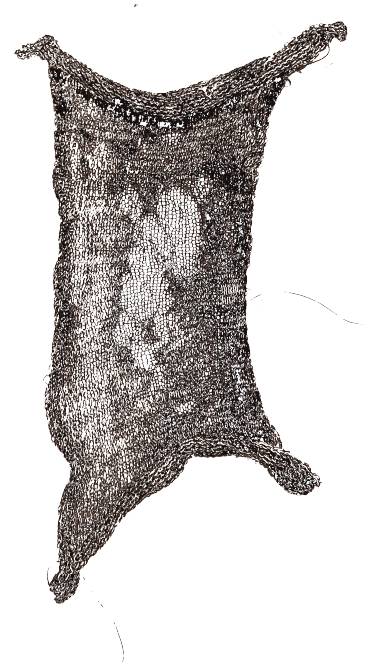
Workout sweat
Asian food sweat

Sauna sweat
The Moisure shirt
An evolution of sweat sweaters, where sweat pat-
terns are transformed into wearable garments.
A rain-soaked “denim sweater” that, unlike sweat, is
meant to cleanse rather than stain.
Between the
Obscene and
the Sacred
2022
Photos: Myself, Mikk Olli
Materials: PVA, sweat, plexiglass, iron
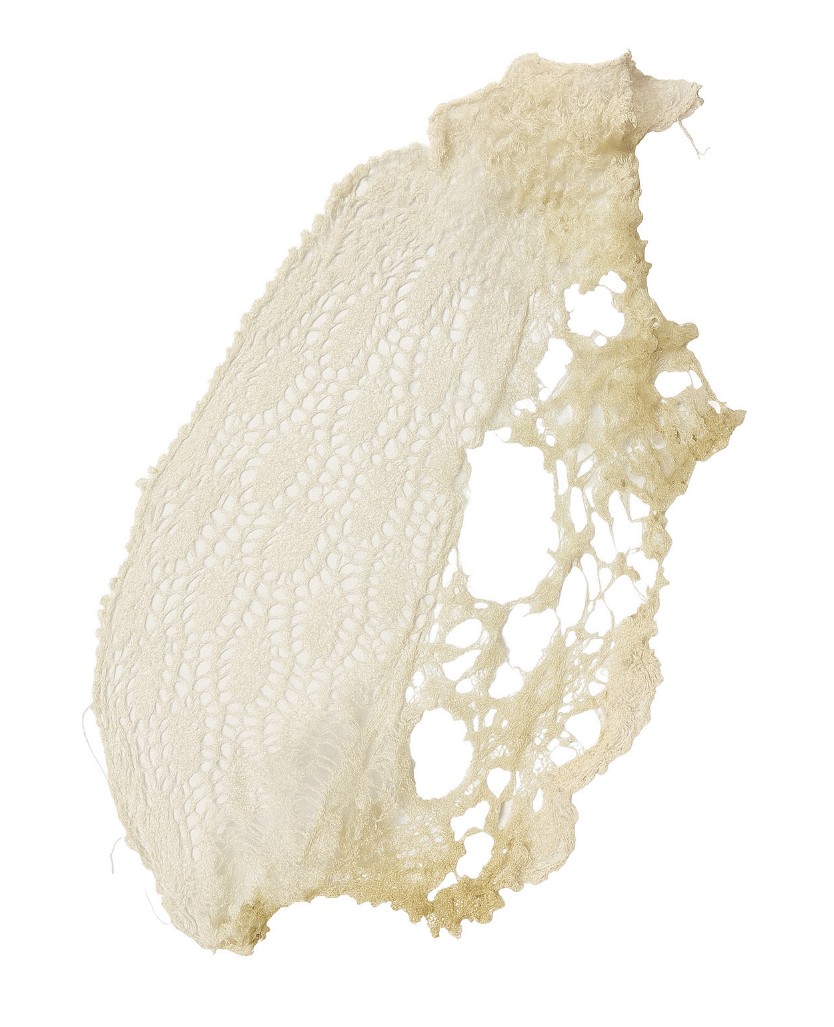
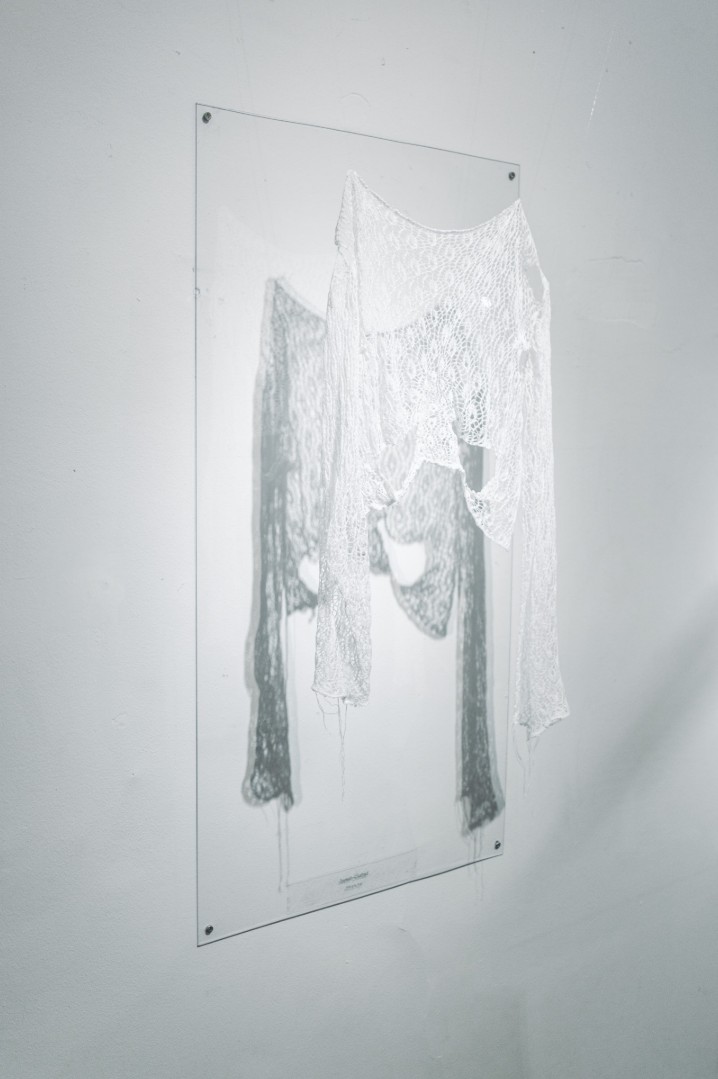
Viscous matter exists on the threshold between
liquid and solid. This slow-moving substance
clings, seeps through categories, threatens our
sense of purity, and stains the boundary between
the self and the world. Viscosity is the cross-sec-
tion of a process of becoming – a base, even ob-
scene layer of being.*
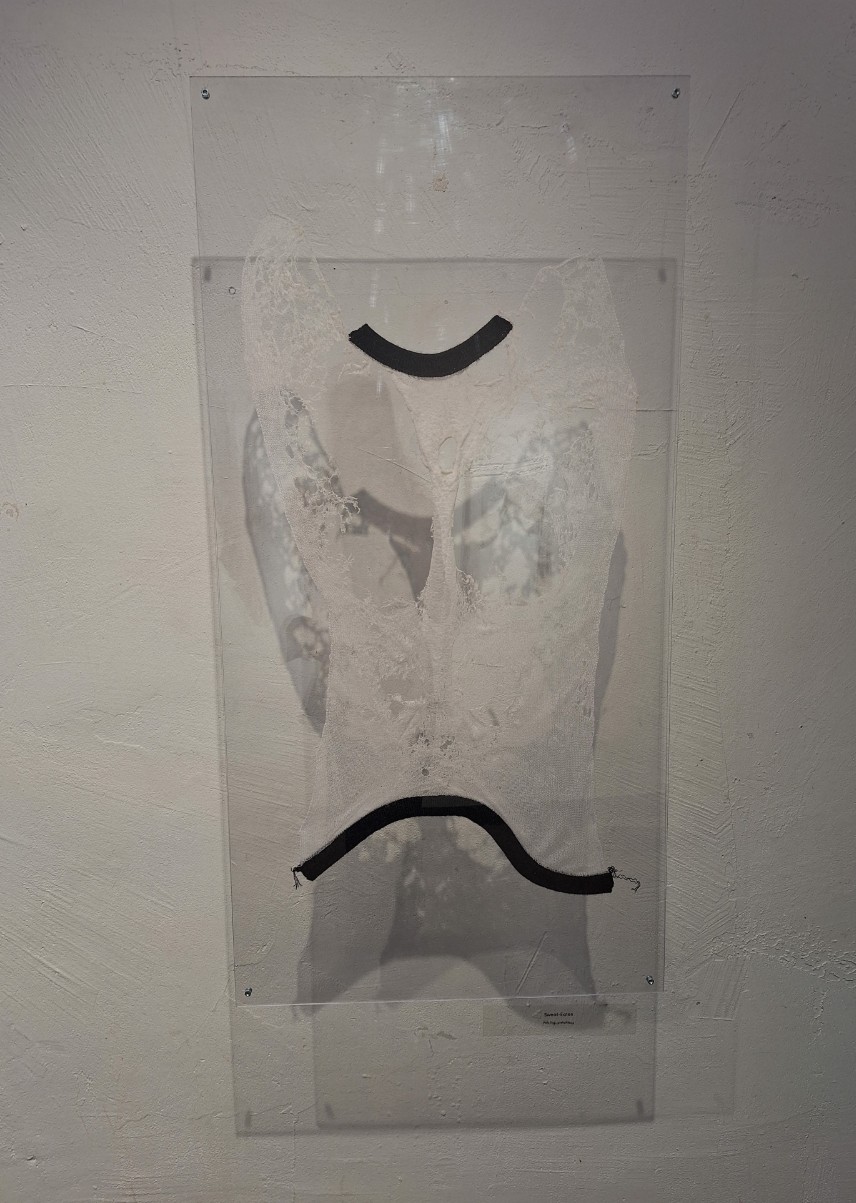
The material states of the exhibition – substance
and lace – invite reflecton on what we percive as
crude or noble forms, and on the higher and
lower manifastations of existance.
*Jean-Paul Sartre, Being and Nothingness (1943)
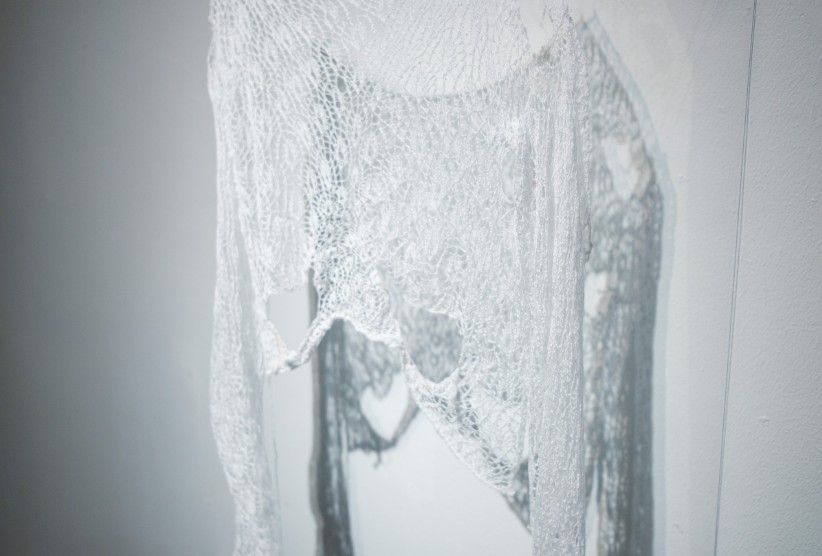
Sweat-clotted
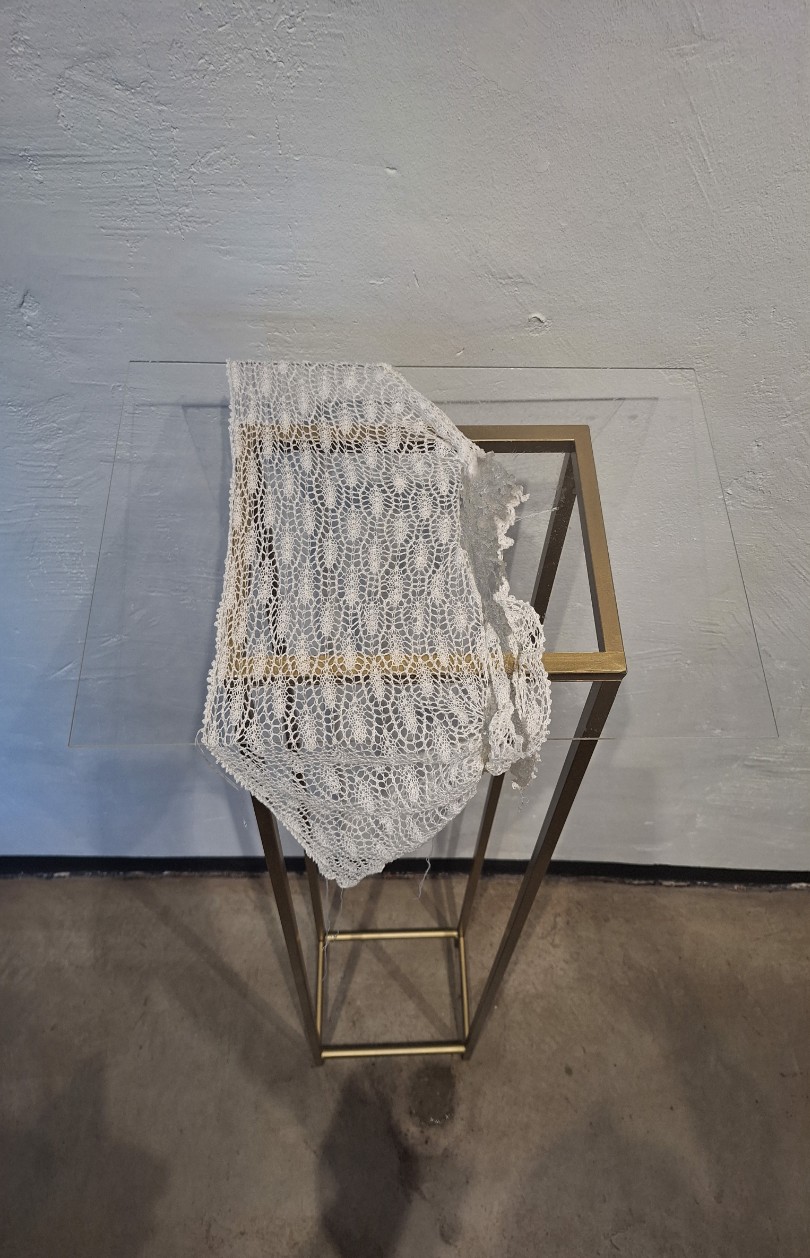
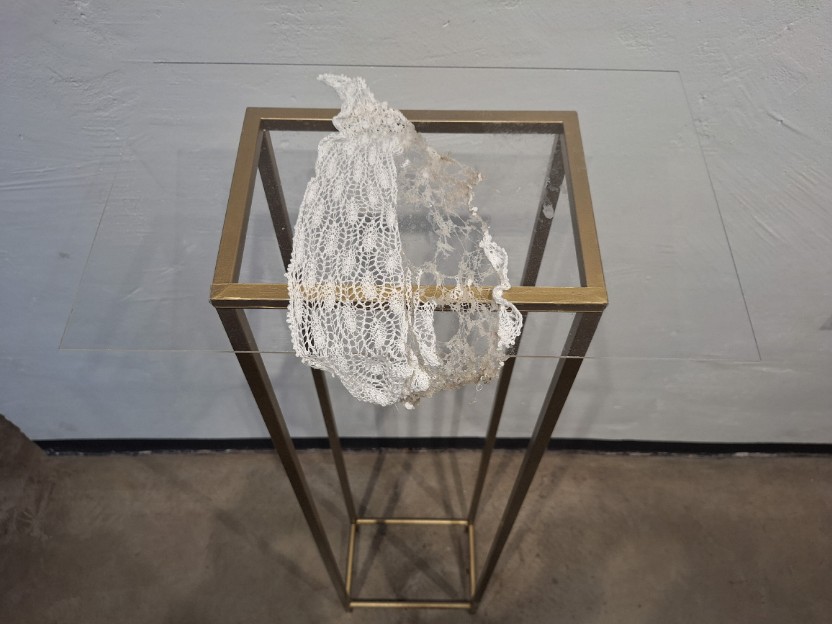
Altar of Seepage
Sweat-eaten
For Sigrid Kuusk
Spotted in The
Wild
Photos: Kertin Vasser, Liisa Saleh, Kalle Veesaar
For Creme de la Creme

For Anne & Stiil

For Liisa Saleh
For Yasmin